How to Care for 100% Cotton Baby Clothing So It Lasts Through Siblings
You’ve invested in quality organic baby clothing – pieces that feel soft against delicate skin and are built to last. But quality only stays quality if you care for it properly. Whether you’re dressing your first newborn or your third, knowing how to wash, dry, and store organic baby wear means those beloved outfits will stay beautiful through every sibling, hand-me-down, and memory.
At Ugly Bugs Baby Wear, we’ve been making 100% cotton baby clothing for over 25 years, and we’ve learned that the secret to longevity isn’t just the fabric – it’s how families care for it. In this guide, we’ll walk you through exactly how to keep your organic baby clothes looking and feeling brand new, year after year.
Why 100% Cotton Baby Clothing Needs Different Care
100% cotton is softer, more breathable, and gentler on sensitive skin but it’s also more delicate. Without proper care, even premium cotton pieces can lose their shape, fade, or develop pilling.
Here’s what makes organic different:
- No synthetic chemicals in the fabric – which means no chemical barrier protecting it from damage. Harsh detergents and high heat can break down fibers faster.
- Natural dyes – many 100% cotton baby clothes use natural or low-impact dyes that fade more easily in hot water or direct sunlight.
- Pure fibers – 100% cotton has no synthetic blends to reinforce it, so rough washing can cause premature wear.
The good news? 100% cotton clothing, when cared for properly, actually lasts longer than conventional pieces because the fibers are stronger and more resilient to begin with.
Pre-Wash: Preparing Your Baby’s Clothes
Turn garments inside out. This protects prints, colors, and the outer surface from fading and pilling. It’s especially important for decorated pieces.
Check pockets and seams. Baby clothes rarely have pockets, but always check for missed milk spit-up
Read the full guide: How to wash newborn clothes for the first time https://uglybugsbabywear.com/wash-newborn-clothes-first-time/
Washing: The Foundation of Longevity
Use cold or lukewarm water (30°C or below).
Hot water breaks down organic fibers and causes colors to fade. Cold water is your best friend for preserving both durability and color.
Choose a gentle, fragrance-free detergent. https://www.faithful-to-nature.co.za/sopure-gentle-baby-laundry-detergent-5l?srsltid=AfmBOoojLByoDh6JgyUQqFznmtob_gpFqtHzqjixVV5vS5WhVuowjXBI
Read the full guide: How to soften stiff cotton baby clothes https://uglybugsbabywear.com/soften-stiff-cotton-baby-clothes/
Drying: Where Most Damage Happens
Air dry whenever possible.
This is the single best thing you can do for 100% cotton baby clothing. Hang pieces in a shaded, well-ventilated area. Direct sunlight can fade colors (especially natural dyes), so dry in shade or indoors.
Read the full guide: Do cotton baby clothes shrink in the wash? https://uglybugsbabywear.com/do-cotton-baby-clothes-shrink/
Storage: Preparing Clothes for Hand-Me-Downs
Fold rather than hang for long-term storage.
Hangers can stretch necklines and shoulders, especially for newborn sizes. Fold carefully and store flat.
Use natural storage solutions.
- Cedar blocks or lavender sachets instead of mothballs (which contain harsh chemicals).
- Breathable cotton storage bags instead of plastic (plastic traps moisture and can cause mildew).
Store in a cool, dry place.
Basements and attics with temperature fluctuations can cause mildew or yellowing. A bedroom closet or linen cupboard is ideal.
Read the full guide: Caring for handmade baby clothes https://uglybugsbabywear.com/caring-for-handmade-baby-clothes/
The Real Cost-Per-Wear: Why Care Matters
Here’s the math that eco-conscious parents get:
A single 100% cotton baby outfit at R230 might seem expensive compared to a R50 mass-produced piece. But:
- Mass-produced clothing often survives 5-8 washes before fading, shrinking, or pilling. Cost per wear: R6-10.
- Quality organic pieces, with proper care, survive 50+ washes and multiple children. Cost per wear: R2-5.
When you factor in hand-me-downs – your second child wearing the same piece, then gifting it to a friend – that outfit has paid for itself multiple times over.
Common Mistakes to Avoid
| ❌ Mistake | ✅ What to Do Instead |
|---|---|
| Washing in hot water | Use cold water every time |
| Using regular or scented detergent | Choose gentle, fragrance-free options |
| Drying on high heat | Air dry or use lowest dryer setting |
| Storing in plastic bags | Use breathable cotton storage |
| Over-washing | Spot-clean and wash only when necessary |
| Using fabric softener | Skip it entirely – it damages organic fibers |
| Ironing at high heat | Air dry to avoid wrinkles; use low heat only if needed |
How to Refresh Faded Colors or Stiffness
For faded colors:
- Soak in cold water with a small amount of white vinegar (1 tablespoon per gallon of water) for 30 minutes.
- Rinse well and air dry. Vinegar can refresh color and remove detergent buildup.
For stiff fabric:
- Add a tiny splash of white vinegar to the rinse cycle (about 1/4 cup per load).
- Air dry rather than machine drying.
- Vinegar softens fabric naturally without the chemicals in fabric softeners.
Building a Hand-Me-Down Rotation
One of the greatest joys of quality baby clothing is passing it down. Here’s how to keep pieces pristine for the next child:
- Inspect after the last wear. Check for stains, loose threads, or damage. Repair now rather than later.
- Wash gently one final time before storage.
- Air dry completely to prevent mildew during storage.
- Store in a labeled container with the size range and season (e.g., “Newborn Summer”).
- Refresh before gifting. A gentle wash and air dry brings pieces back to life for the next family.
The Bottom Line
Caring for 100% cotton baby clothing is about more than keeping things looking nice – it’s about honoring the investment you’ve made in your baby’s comfort and the environment. Every time you wash carefully, dry gently, and store thoughtfully, you’re extending the life of those pieces and reducing waste.
At Ugly Bugs Baby Wear, we’ve been building pieces meant to last 25+ years. With these care tips, you’ll get every bit of value from them – through your first baby, your second, and beyond.
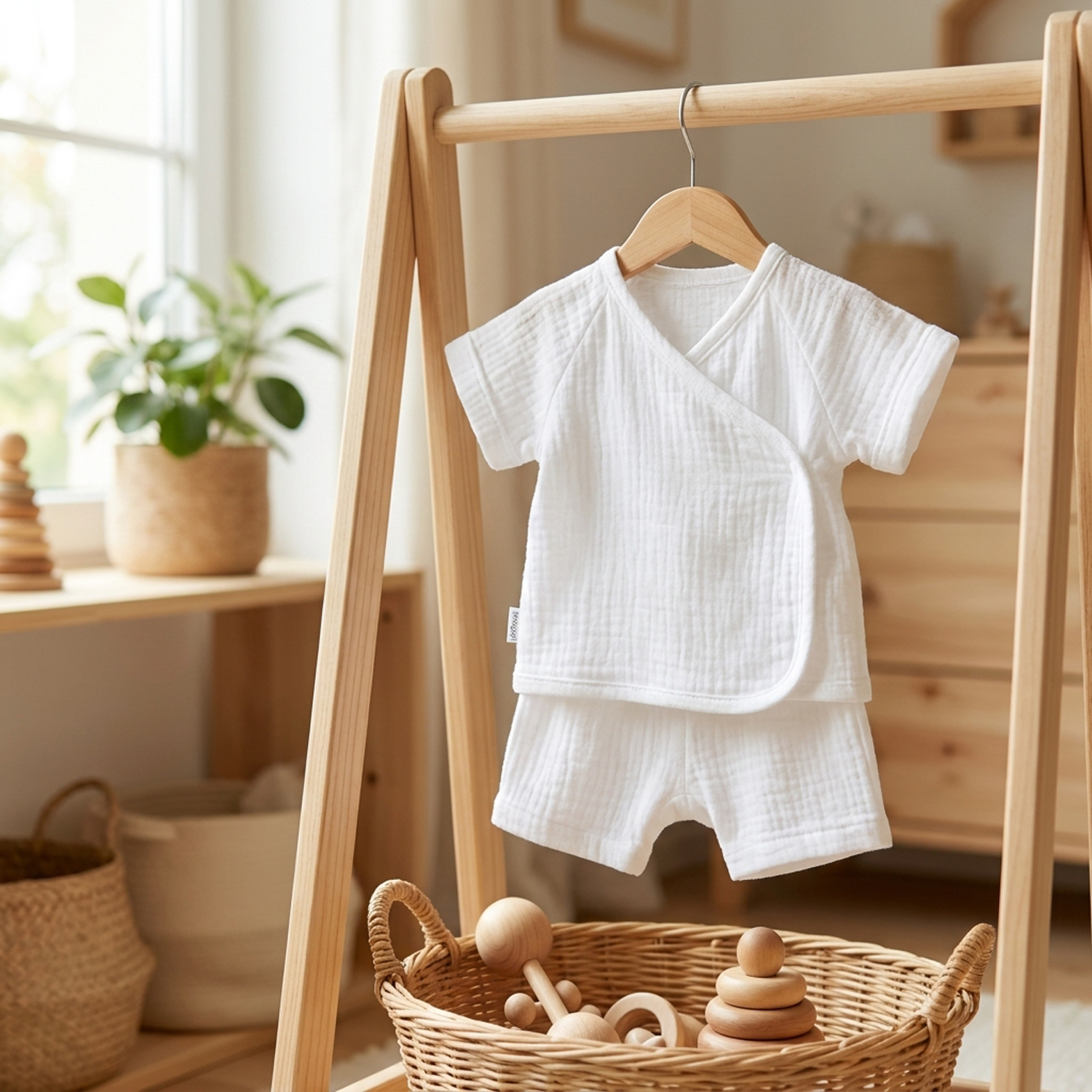
Ready to invest in organic baby wear built to last? Shop our collection https://uglybugsbabywear.com/product/white-muslin-2-piece-set-gender-neutral-baby-outfit/and use code WELCOME10 for 10% off your first order.
Key Takeaways (Quick Reference)
- Wash in cold water with gentle, fragrance-free detergent
- Air dry whenever possible; use lowest heat if machine drying
- Turn inside out before washing to protect prints and colors
- Store flat in breathable containers, away from direct sunlight
- Spot-clean frequently to reduce full washes
- Refresh with vinegar if colors fade or fabric feels stiff